
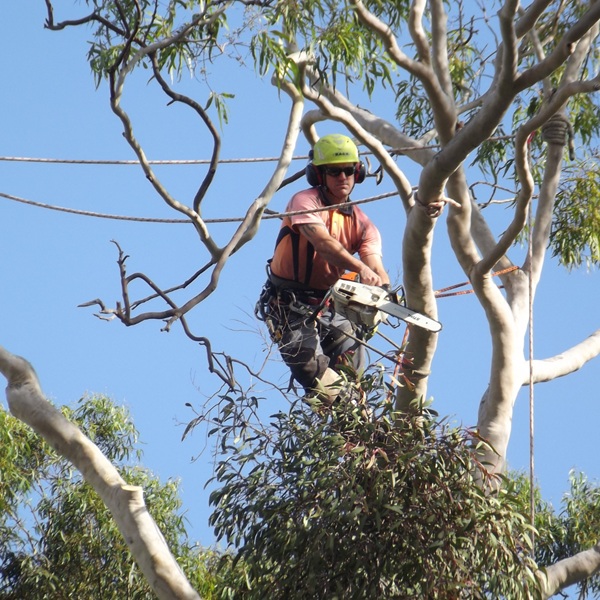
This guide explains how arborists in Sydney typically learn the job, what credentials matter, and what to check before booking them.
What does an arborist in Sydney actually do?
They manage tree health, safety, and structure across backyards, streetscapes, and worksites. In practice, arborists in Sydney diagnose tree decline, recommend pruning, remove hazardous trees, and help owners meet local council requirements.
They also plan works around powerlines, buildings, and tight access. That’s why training focuses as much on risk and compliance as it does on tree biology.
How do arborists in Sydney usually start their training?
Most start as ground crew and train while working under supervision. Many arborists in Sydney begin with basic chainsaw handling, ropes, chipping, and site safety before moving into climbing, rigging, and tree assessment.
A structured pathway then builds formal qualifications, supervised logbook hours, and competency-based assessments. The aim is to prove skills, not just time on the tools.
Which Australian qualifications are most common for arborists in Sydney?
The most common formal pathway is a nationally recognised qualification in arboriculture. Many arborists in Sydney hold a Certificate II or Certificate III in Arboriculture, which covers pruning, removals, climbing, pests and disease basics, and worksite safety.
Some progress to higher study focused on tree assessment, project planning, and consulting. Qualifications matter because they map directly to units of competency assessed against Australian standards.
Where do arborists in Sydney complete their qualifications?
They typically train through Australian Registered Training Organisations (RTOs) and TAFEs that deliver arboriculture units. For arborists in Sydney, this usually means a mix of classroom learning and practical assessments on real trees and real job sites.
Training often includes plant biology, soil and water basics, pruning theory, hazard identification, and rescue procedures. Assessment is hands-on, with evidence required for each competency.
What safety tickets and licences are commonly required?
They often need multiple high-risk and safety-related tickets depending on the work they take on. Many arborists in Sydney hold a White Card (construction induction) and may also need first aid certification for crew requirements.
If they operate elevated work platforms, they may hold EWP training or a high-risk work licence where applicable. Chainsaw operation units and traffic management training are also common on roadside or public-facing jobs.
How do arborists in Sydney learn climbing, rigging, and rescue?
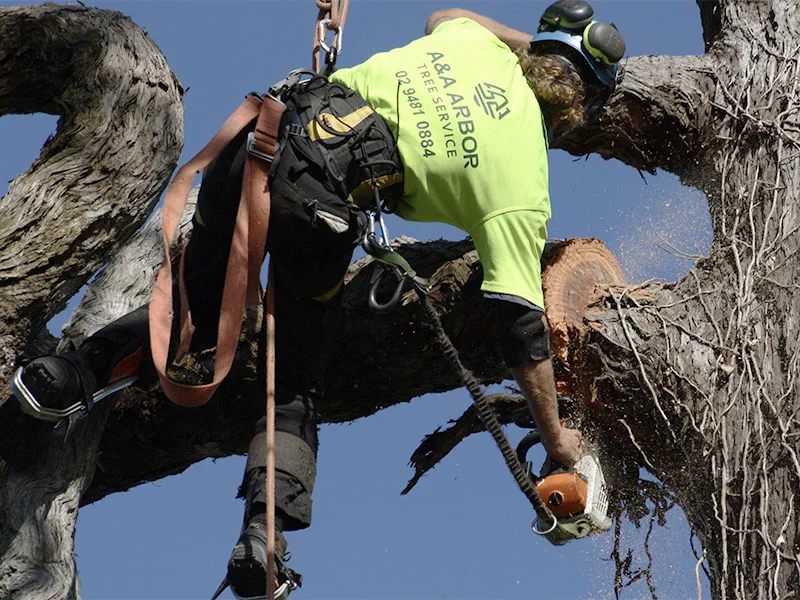
They learn through competency-based training plus supervised practice in the field. For arborists in Sydney, climbing and rigging training covers rope systems, anchor selection, load management, and controlled lowering to avoid property damage.
Rescue training is a major part of this process. Teams practise aerial rescue and emergency response because mistakes at height can be catastrophic, especially in tight suburban sites with fences, roofs, and power service lines nearby.
What standards guide how arborists in Sydney prune and remove trees?
They commonly work to Australian Standards and industry guidance used across New South Wales. Many arborists in Sydney follow accepted pruning principles that prioritise tree health, structural integrity, and risk reduction rather than aggressive cutting.
On quality jobs, their work reflects clear targets like reducing end-weight, removing defects, improving clearance, or managing storm damage. When someone sees “lopping” offered as a default, that can be a red flag because it often conflicts with best practice.
How do arborists in Sydney get certified for tree risk assessment?
Some move into formal tree risk assessment and reporting after gaining experience and additional training. Arborists in Sydney who provide reports for development applications, insurance matters, or high-risk trees often complete extra study in tree biomechanics, defect identification, and risk methodology.
They may also build capability in mapping, documentation, and evidence-based recommendations. Good risk assessment is about defensible decisions, not just opinions, especially when councils or insurers are involved.
Are there professional memberships or industry certifications that matter?
Yes, membership in recognised industry bodies can signal ongoing professional standards. Many arborists in Sydney join organisations such as Arboriculture Australia (AA) or the International Society of Arboriculture (ISA), depending on their career path.
Membership does not automatically equal skill, but it often indicates exposure to continuing education, professional networks, and updated guidance. For consulting or complex jobs, these affiliations can be a useful extra credibility check.
How do councils and local rules affect arborists in Sydney?
They often need to work within council rules covering protected trees, pruning limits, and permit requirements. Arborists in Sydney regularly deal with Tree Preservation Orders, heritage controls, and development conditions that vary by local government area.
A capable arborist explains what can be done legally before they quote, and they document the scope clearly. If they promise to “handle council” without describing the permit pathway, it is worth asking follow-up questions.
What role does insurance play in certification and professionalism?
Insurance is not a training credential, but it is a practical requirement for safe, legitimate work. Reputable arborists in Sydney usually carry public liability insurance, and many also have workers compensation where they employ staff.
Insurance helps protect the client if branches damage property or a worker is injured. If they avoid discussing insurance, or they cannot provide a current certificate of currency, that is a major risk sign.
How can someone verify the training of arborists in Sydney before hiring?
They can ask for specific proof and judge how clearly it is explained. When checking arborists in Sydney, it helps to request:
- Their arboriculture qualification level (and where it was obtained)
- Evidence of relevant tickets (chainsaw units, first aid, EWP, traffic control if needed)
- Proof of public liability insurance
- A written quote describing the pruning standard, cut targets, and debris removal
- Recent local references for similar sites in Sydney suburbs
If they are credible, they answer directly and provide documents without hesitation.
What does ongoing training look like for arborists in Sydney?
They keep learning because pests, diseases, standards, and equipment change over time. Many arborists in Sydney do refreshers in aerial rescue, new rigging methods, and updated safety procedures, especially after incidents or near misses in the industry.
Some also attend workshops on tree biology, soil improvement, and advanced pruning. The best operators treat training as a normal cost of doing safe business, not a one-time hurdle.
What should clients expect from well-trained arborists in Sydney on the day?
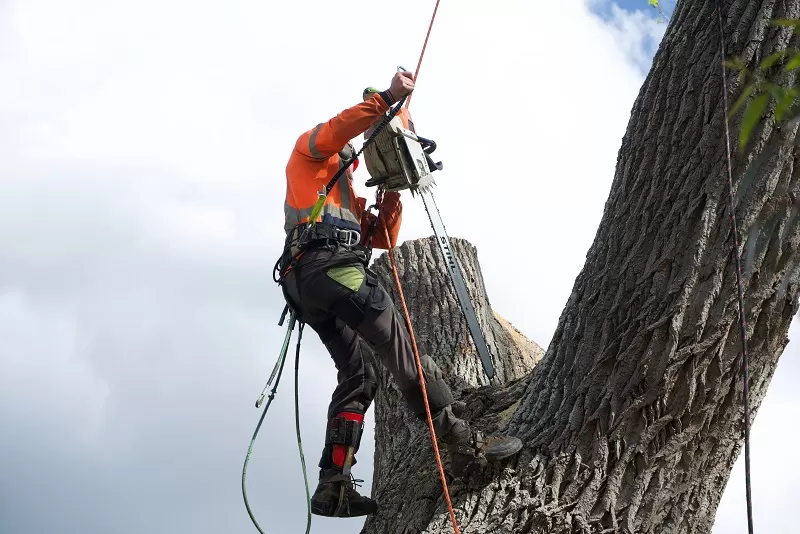
They should expect a documented plan, clear safety controls, and tidy execution. Competent arborists in Sydney arrive with the right PPE, set up exclusion zones, communicate with neighbours when needed, and use rigging to protect structures.
They also explain what they are doing and why, especially if they adjust the plan after inspecting the tree up close. The job should end with clean cuts, controlled lowering, and a site left safe and neat.
How can someone tell the difference between a certified arborist and a “tree cutter”?
They can look for diagnosis, standards-based recommendations, and defensible decision-making. Skilled arborists in Sydney talk about tree structure, targets, risk, and long-term outcomes rather than offering aggressive cutting as the default.
They also provide a scope that matches the tree’s needs, not a one-size-fits-all approach. When they recommend removal, they explain the specific defect or risk driver, and they outline options where appropriate.
What is the simplest checklist to hire arborists in Sydney with confidence?
They can focus on verification and clarity rather than marketing claims. A simple approach is to hire arborists in Sydney who can show qualifications, current insurance, and a written scope aligned with Australian best practice.
If they communicate well, document everything, and prioritise safety, that is usually a strong signal their training and certification are real, current, and used properly on the job.
FAQs (Frequently Asked Questions)
What services do arborists in Sydney provide?
Arborists in Sydney manage tree health, safety, and structure across backyards, streetscapes, and worksites. They diagnose tree decline, recommend pruning, remove hazardous trees, assist with local council requirements, and plan work around powerlines and buildings to ensure compliance and safety.
How do arborists in Sydney typically receive their training and qualifications?
Most arborists in Sydney start as ground crew, training under supervision with hands-on experience in chainsaw handling, ropes, chipping, and site safety. They progress through climbing, rigging, and tree assessment while completing nationally recognised qualifications such as Certificate II or III in Arboriculture via Registered Training Organisations (RTOs) or TAFEs.
What certifications and safety tickets are essential for arborists working in Sydney?
Arborists in Sydney commonly hold a White Card (construction induction), first aid certification, chainsaw operation units, traffic management training for roadside jobs, and may also require elevated work platform (EWP) training or high-risk work licences depending on their tasks to ensure workplace safety.
Which Australian standards guide the pruning and removal practices of arborists in Sydney?
Arborists in Sydney adhere to Australian Standards and industry guidelines that emphasize tree health, structural integrity, and risk reduction. Quality pruning targets include reducing end-weight, removing defects, improving clearance, and managing storm damage while avoiding harmful practices like indiscriminate lopping.
How do arborists in Sydney become certified for tree risk assessment?
Experienced arborists seeking certification for tree risk assessment undertake additional training in tree biomechanics, defect identification, risk methodologies, mapping, documentation, and evidence-based recommendations. This enables them to provide defensible reports for development applications and insurance matters.
What role do professional memberships play for arborists in Sydney?
Memberships with organisations such as Arboriculture Australia (AA) or the International Society of Arboriculture (ISA) indicate ongoing professional development. While not a direct measure of skill, these affiliations demonstrate commitment to continuing education, adherence to industry standards, and access to updated guidance beneficial for consulting or complex jobs.
<script type="application/ld+json">
{
  "@context": "https://schema.org",
  "@type": "BlogPosting",
  "mainEntityOfPage": {
    "@type": "WebPage",
    "@id": "https://analogforestrynetwork.org/how-are-arborists-in-sydney-trained-and-certified/"
  },
  "headline": "How Are Arborists in Sydney Trained and Certified?",
  "image": [
    "https://analogforestrynetwork.org/wp-content/uploads/2026/08/Aura-Trees-Services-9.webp",
    "https://analogforestrynetwork.org/wp-content/uploads/2026/08/AA-Arbor-Tree-Service-arborists.webp",
    "https://analogforestrynetwork.org/wp-content/uploads/2026/08/Tree-Management.jpg"
  ],
  "author": {
    "@type": "",
    "name": "John Parer",
    "url": "https://analogforestrynetwork.org/author/admin/"
  },
  "publisher": {
    "@type": "Organization",
    "name": "Analog Forestry Network",
    "logo": {
      "@type": "ImageObject",
      "url": "https://analogforestrynetwork.org/wp-content/uploads/2024/10/logo-Analog-Forestry-Network.png"
    }
  },
  "datePublished": ""
}
</script>